August 17, 2026 · 7 min
What a legionella risk assessment covers in a US building
The phrase has a precise legal meaning in another country and a looser one here. Sorting that out is the first job, because most of what ranks for it is written for the wrong jurisdiction.
At 210 searches a month this is the head query of its cluster, and it arrives carrying a problem: much of what a search returns is written for a regulatory regime that does not apply here. Untangling that is worth doing before describing the exercise itself.
One thing first, flatly: a risk assessment describes a building. If your concern is a person’s health, contact a doctor, for the reasons set out in disease testing is not water testing. Nothing on this page or this site is medical advice.
A term with a precise meaning somewhere else
In the United Kingdom, a legionella risk assessment is a specific duty. Guidance from the Health and Safety Executive, known as L8, requires duty holders, including residential landlords, to have one, and an industry exists to supply them. A large share of the pages answering this query are written for that regime.
In the United States there is no single federal document by that name. What is expected of a building depends on its type, its jurisdiction, and sometimes its insurer or accreditor. Reading UK guidance as if it bound a building in Ohio imports obligations that do not exist here, and misses the ones that do.
The exercise itself, stripped of jurisdiction
Underneath the terminology, the exercise is the same everywhere: a structured examination of a building’s water systems to find where conditions could favour growth of the organism and where water becomes airborne. The output is a written record of findings, specific to that building, that a management programme can then be built on, and the shape that record usually takes is examined in what a risk assessment template holds.
What a competent assessment walks through
The incoming supply and where it enters. Generation and storage of hot water. The distribution and recirculation loops, and how far the far ends are from the plant. Every outlet class, and which ones are rarely used. And, with particular attention, every device that turns water into an aerosol: cooling towers, spa pools and hot tubs, decorative fountains, misters, showers.
Alongside the equipment, the conditions: the temperature profile across the system, dead legs left by refurbishments, low-occupancy wings and seasonal shutdowns where water stands, a pattern examined under legionella testing in hotels, and the state of tanks and vessels that are rarely opened.
Where ASHRAE 188 fits
ASHRAE Standard 188 is the reference point most US buildings orient on. It describes a process: survey the building, identify where hazardous conditions could occur, and where they could, establish a water management programme with control points, limits, monitoring and corrective actions. Whether the standard applies to a given facility as a requirement depends on the jurisdiction and on who regulates or accredits the facility, which is a local question with a checkable answer.
The relationship to the plan matters more than the label. The assessment finds the conditions; the water management programme controls them. What the resulting plan has to contain is covered in what a water management plan contains.
An assessment is not a test
No sample is taken and no count is produced. The two are complementary: the assessment is what tells you where sampling would be informative, which outlets are sentinels, and which parts of the system a negative result would say nothing about. Choosing those points is covered under where to sample.
It has a shelf life
An assessment describes the building as it was on the day of the walk. A refurbishment, a new piece of aerosol-generating equipment, a change of use, an extended shutdown or an unexpected sampling result each invalidate parts of it. A competent assessment states its own review triggers rather than leaving them to memory.
Who should do it
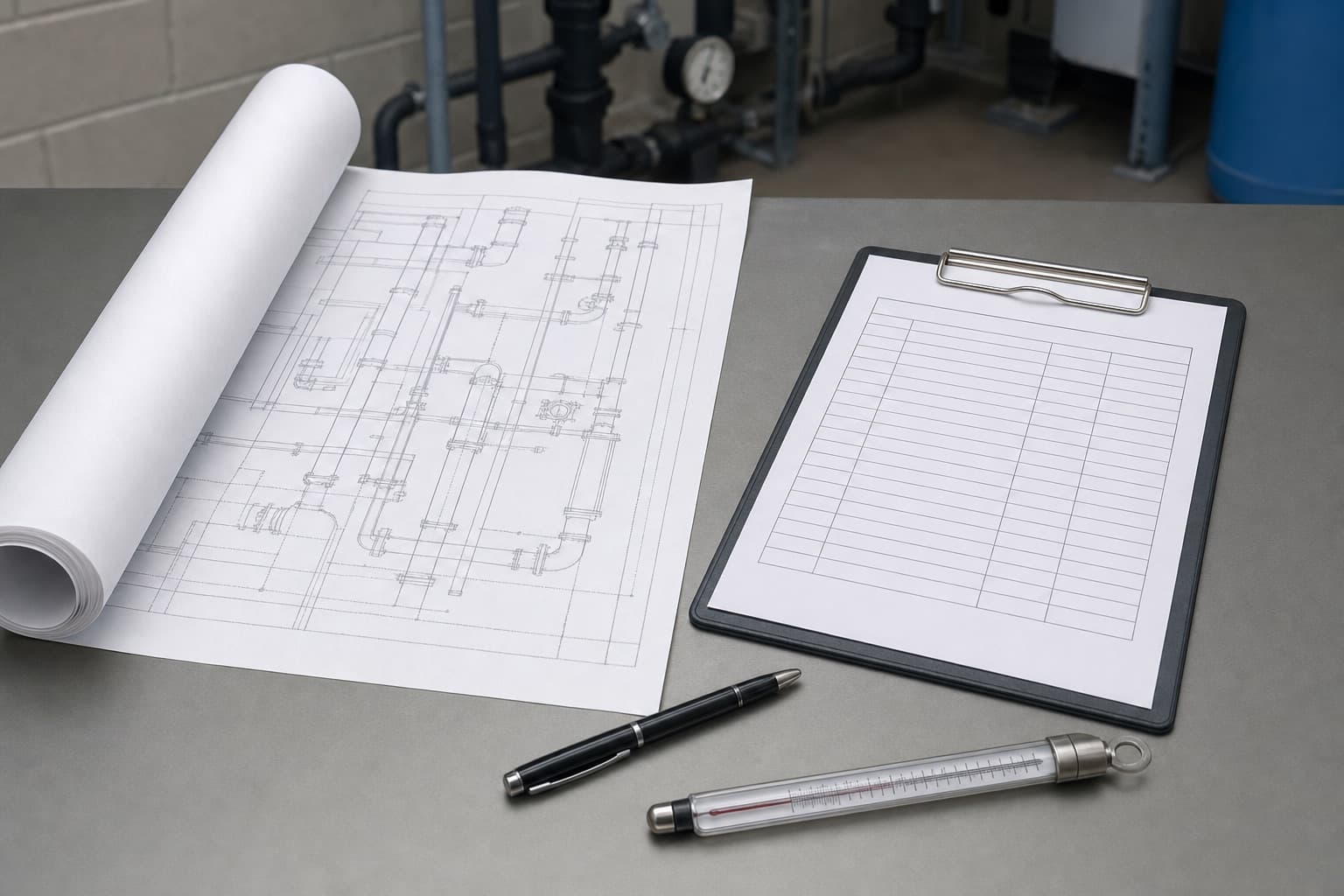
Someone who walks the system with the drawings in hand, corrects the drawings where the building disagrees with them, and writes findings specific enough to act on. The qualification that matters most is not a certificate but the willingness to open plant room doors, and the independence to report what is behind them. What to ask a provider before engaging one is set out in what a risk assessment service includes.
Have the building walked before the plan is written
An assessment written from drawings alone describes what was designed, not what was built. We start in the plant room.
Legionella Screen samples building water systems and cooling towers and has the samples analysed by culture in an accredited laboratory. It does not diagnose illness, does not treat anyone, and gives no medical advice of any kind.