What drives the cost, and why the cheapest quote is usually the smallest plan
This page contains no figures. What it contains is the reason two quotes for “Legionella testing” can differ by a factor of several: they are describing different numbers of sample points, different laboratory methods and different amounts of thinking.
Why the cheapest quote is usually the smallest plan
Sampling is priced per point, plus mobilization, plus reporting. The fastest way to produce a low number is to propose fewer points, which is also the fastest way to produce a report that describes very little of the building.
That is not dishonesty on the vendor's part. It is what happens when a buyer asks for a price instead of a plan.

The drivers
Number of sample points
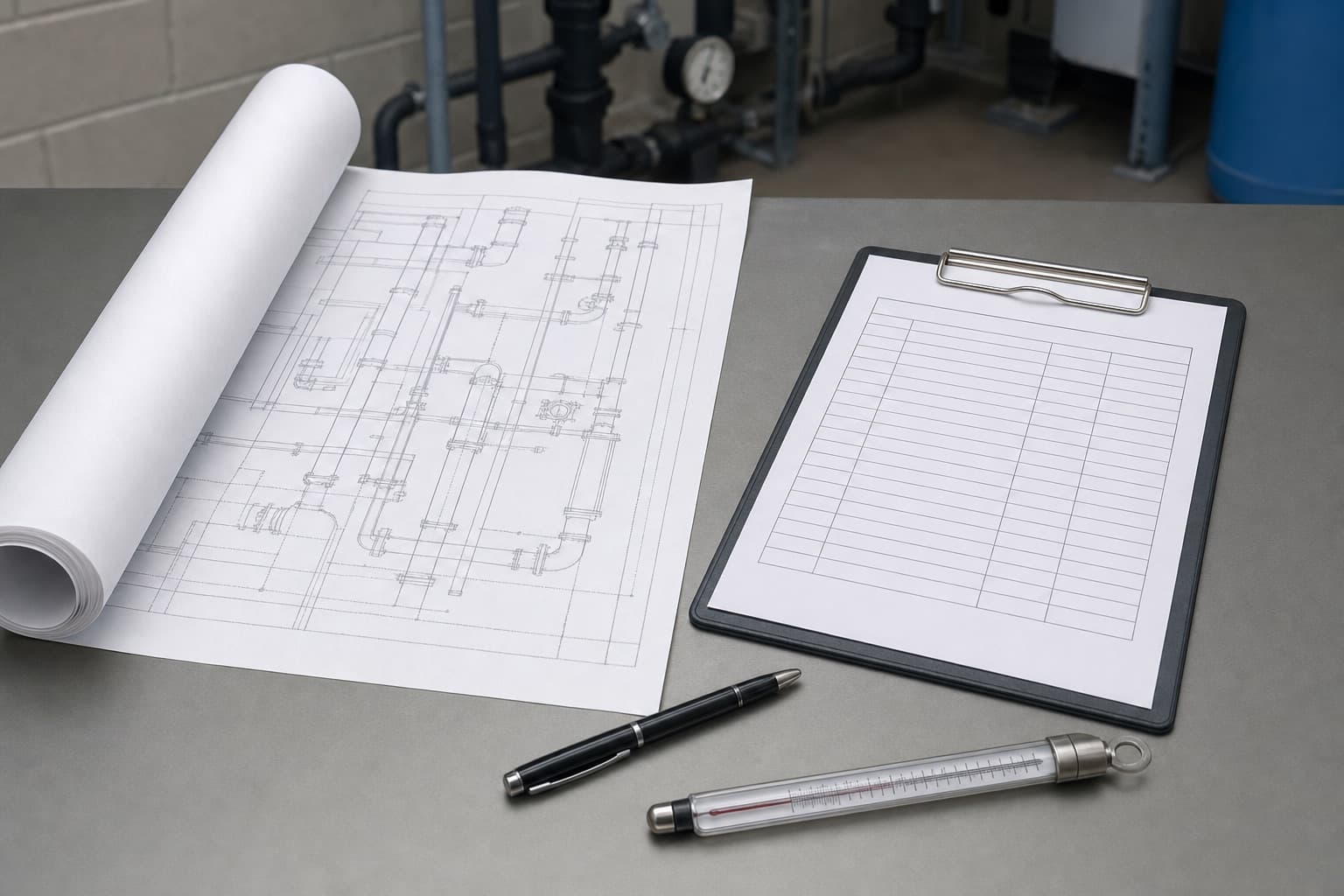
The dominant variable, and the one that should be justified in a written plan derived from the system diagram.
Laboratory method
Different approaches cost different amounts and answer slightly different questions, with different turnaround times. Compare like with like, and keep the method consistent over time.
Turnaround
Faster results cost more, and are worth it in some situations and irrelevant in others. Decide which you are in before paying for speed.
Who collects
A site visit by a trained collector costs more than trained site staff collecting under a documented procedure, and it removes a variable. Both are legitimate; the choice belongs in the plan.
Access and coordination
Occupied floors, tenant notice, clinical areas, out-of-hours work, escorts and inductions. In some buildings this exceeds the sampling itself.
Reporting depth
A table of results is one product. A report that places results against the programme, describes what was not sampled and recommends next steps is another. The second requires professional time and should be priced as such.
Programme support
Writing or revising a water management programme is separate work and separate money, and it is frequently the better first purchase, see the programme page.
Six questions that make quotes comparable
- How many sample points, and how were they chosen?
- Which laboratory method, and what turnaround?
- Who collects the samples, and under what procedure?
- What does the report contain beyond a table of results?
- Is any programme work included, or is this verification only?
- What is excluded, in one list?
Where money is genuinely wasted
- A single round of samples with no programme and no response plan: a number nobody can act on.
- Switching laboratory methods between rounds, which destroys comparability.
- Sampling only the convenient points, then discovering the plan cannot answer the question that was asked.
- Paying for fast turnaround in a situation where nothing would be done differently that week.
- Paying twice for access because the plan did not cover the tenanted floors the first time.
Frequently asked
Can you tell me roughly what a round costs?
No, and not out of coyness: the number depends almost entirely on how many points a competent plan calls for in your building. Get the plan first; the price follows from it.
Is it cheaper to test several buildings at once?
Usually, because mobilization and coordination are spread. Whether the plans are comparable across buildings is a separate question worth settling first.
Should we buy programme work or testing first?
If you have no programme, the programme. Testing verifies a programme; without one there is nothing to verify and no agreed response to a result.
Last reviewed July 29, 2026.
Get a plan priced, not a sample count
Request testing and its systems. Providers who propose a plan and justify the point count are doing the work; those quoting per sample are selling a commodity.
Legionella Screen samples building water systems and cooling towers and has the samples analysed by culture in an accredited laboratory. It does not diagnose illness, does not treat anyone, and gives no medical advice of any kind.