August 19, 2026 · 6 min
A legionella risk assessment template: what it captures, and the one thing it cannot
Fifty searches a month for a form. A form is genuinely useful, and it cannot contain the only hard part of the job, which is knowing the pipework the form describes.
People searching for a template want structure, and that is a reasonable thing to want. This article describes what a good one contains and what it can never contain, and it does not end with a download button, for a reason that is the point of the article.
What a template is genuinely good for
Completeness and consistency. A structured form stops the walkdown from skipping the tank nobody wants to climb to. It makes two assessments of the same building comparable two years apart, and assessments of two buildings comparable to each other. It forces findings into fields that someone can act on, instead of prose that nobody rereads.
It also protects the record over time. Assessors change, contractors change, and a finding written into a consistent structure survives the person who wrote it. The unstructured version lives in somebody’s head, and leaves with them.
The sections any usable template shares
A description of the system, keyed to a schematic. An inventory of every aerosol-generating device. The temperature profile, measured rather than assumed. Areas of stagnation: dead legs, low-use outlets, seasonal wings. The controls currently in place and who operates them. Named responsibility for each finding, and a review date with the triggers that bring it forward.
If a template you are evaluating lacks one of these, that is what the evaluation found.
The one thing no template can know
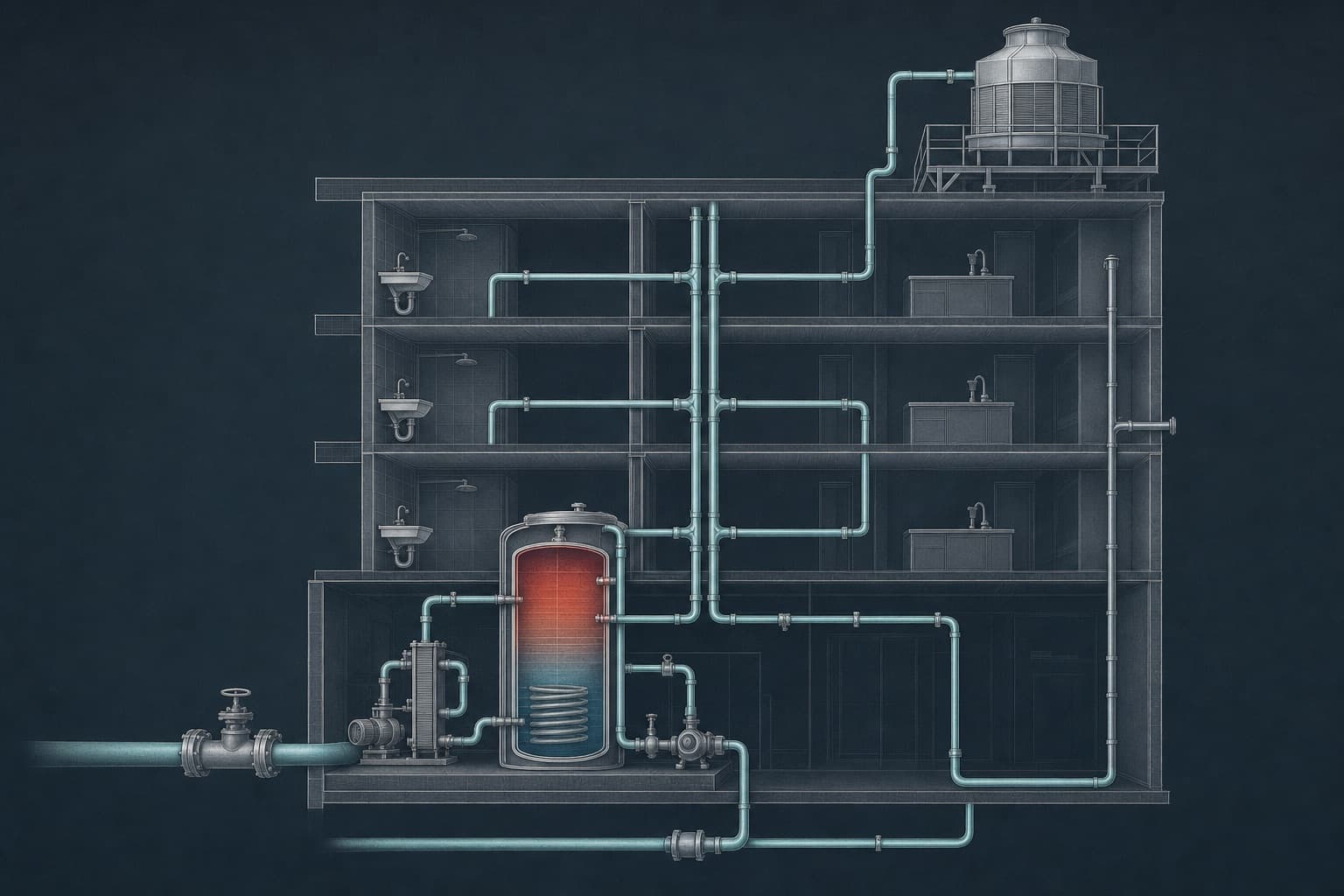
Your pipework. The capped tee behind a wall from a refurbishment fifteen years ago, the recirculation loop that was extended without being rebalanced, the storage vessel the drawings do not show. A template has a box that says “dead legs”, and the box is empty until somebody who understands the real system fills it, usually by walking the building with the schematic and correcting the schematic as they go.
That knowledge is the entire value of the finished document. The form is the cheap part. Why those hidden branches matter so much is set out under where to sample.
The failure mode: a filled-in template for another building
The worst document in this field is not a blank form. It is a completed one copied from a different building, with the address changed. It reads as finished, it passes a casual review, and every finding in it is about pipework that is not yours. Checking a deliverable for exactly that is one of the tests in what a risk assessment service includes. A plan built on it inherits the defect, which is the same failure described in what a plan has to contain.
The check takes one minute: pick any specific claim in the document and go look. If the assessment says the calorifier drain is accessible, stand in front of it.
Fill it in from the schematic and the walk, in that order
Start on the drawing, because dead legs are invisible in a corridor and obvious on paper. Then walk the system to find where the drawing is wrong, because it is wrong somewhere. The template is filled in third, as the record of the other two. A template filled in at a desk, from memory, records the memory.
When a template is enough, and when it is not
For a small, simple system, a single hot water heater serving a handful of outlets with no aerosol equipment, a well-designed form completed honestly may be most of what is needed, with the depth of the exercise matched to the simplicity of the system. For anything with a cooling tower, a spa pool, recirculating loops or a complex occupancy, the template is the notebook and the assessment, described in what a risk assessment covers, is the work. Which side of that line a building falls on, and what the resulting findings feed into, is established as part of the water management programme.
Bring us the template you have, filled or blank
We check what it says against the system it describes. The gaps between the two are the findings.
Legionella Screen samples building water systems and cooling towers and has the samples analysed by culture in an accredited laboratory. It does not diagnose illness, does not treat anyone, and gives no medical advice of any kind.