September 7, 2026 · 7 min
Cooling tower cleaning services: how to buy one, and how to prove it worked
We do not clean cooling towers. We test them, which is how a facility finds out whether the cleaning it just paid for actually changed anything.
At 590 searches a month and $17.33 a click, this is the most valuable query in the cooling tower cleaning cluster, and its measured competition index is 0.08. An expensive click that almost nobody bids on describes a market where buyers arrive with money and very little to compare sellers against. This page is not one of the sellers, and that has to be said first.
What we do, and what we do not
We sample cooling towers and analyse the samples in a laboratory. Cleaning is a different trade, with its own equipment, its own confined-space competence and its own contractors, and we are not in it. The two trades meet at exactly one point: the only objective way to know whether a clean achieved anything biological is a sampling result, and producing those is our work.
What a cleaning service actually sells
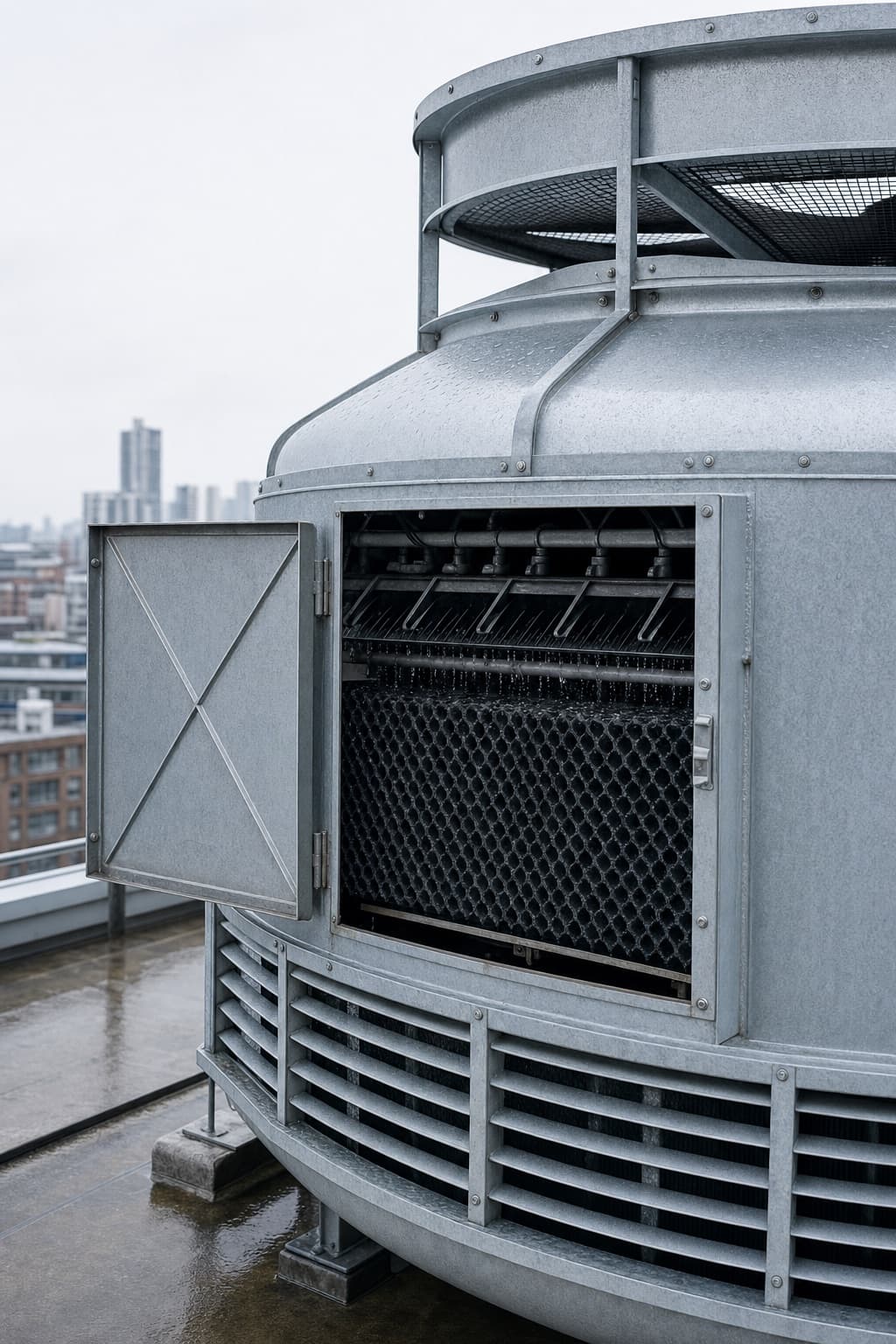
A physical intervention. The tower comes out of service and is drained, and the surfaces that chemistry cannot reach are dealt with by hand and machine: sediment out of the basin, deposits off the fill pack where access allows, drift eliminators inspected and cleaned, the distribution deck cleared, then a disinfection and rinse before refill.
What separates one service from another is scope. Some quotes cover the basin only, some the whole tower including the fill, and the difference is invisible on an invoice line that just says cleaning. Scope is the first thing to establish, in writing, before comparing anything else. A price without a scope is not a price; it is a number waiting for a dispute.
Questions worth asking before engaging one
- Exactly which components are in scope: basin, fill, drift eliminators, deck?
- Is the fill cleaned in place, removed for cleaning, or excluded?
- What disinfection is applied before refill, and how is it verified?
- How is the waste water handled, against which local discharge requirements?
- What written record of the work do we receive, with photographs?
- Is any of the work subcontracted, and to whom?
None of these questions requires technical knowledge to ask, and the answers sort contractors quickly.
The invoice is not the evidence
After a competent clean the tower looks clean, and looking clean settles less than it appears to. A visual pass confirms that sediment and visible deposits left the building. It says nothing about what remains alive on the wetted surfaces, and nothing about how the system behaves once it is back at temperature and back under load.
The organism this site exists to measure lives in biofilm on surfaces, and a surface can look clean and be colonised. That is precisely the case a visual inspection cannot separate from a good outcome, and a laboratory can. The claim that the tower was cleaned is a statement about labour. The claim that the clean worked is a statement about biology, and it needs a measurement. What that measurement moves, and what it cannot, is set out in what a clean changes in a result.
The before and after pair
Verification is two sampling rounds against the same points with the same method: one before the tower is drained, one after it has returned to normal operation. The first is the baseline the clean is judged against; without it, the second number floats with nothing to be compared to. Points, method and laboratory have to match between the two rounds, or the comparison quietly stops meaning anything. What a single count in either round can be taken to mean is set out in what a legionella test tells you. The baseline also protects the contractor: a good clean deserves a result that shows it. How we sample a tower is described under cooling tower testing, and what happens to the sample afterwards under sampling and analysis.
Why the sampler should not be the cleaner
A cleaning contractor who also takes the verification samples is marking its own work. We argue the same separation about chemical suppliers in cooling tower water treatment, and it holds here with less subtlety: a result showing that a clean failed costs us nothing to report, because we did not sell the clean.
Where a requirement to clean comes from
How often a tower must be physically cleaned is not universal. It comes from the manufacturer’s guidance, from the facility’s water management programme, and in some jurisdictions from registration and maintenance requirements that apply specifically to cooling towers. Which of those bind your tower is a local question, and the programme should already contain the answer. If it does not, that finding is worth more than this article.
Book the before and after samples around your next clean
We do not clean towers, so we have no stake in what the results show. That is the point.
Legionella Screen samples building water systems and cooling towers and has the samples analysed by culture in an accredited laboratory. It does not diagnose illness, does not treat anyone, and gives no medical advice of any kind.