September 18, 2026 · 6 min
The cooling tower cleaning process, and the two points where sampling belongs
Twenty searches a month from people who want the stages in order. Here they are, described by the trade that measures the outcome rather than the one that performs the work.
This is the smallest query in the cluster, 20 searches a month at $3.90, and it is asked by people who want a sequence. We can give one, with one caveat: the cleaning belongs to cleaning contractors and the sampling to others again. The reason we can still describe the process usefully is that our work brackets it, one sample on each side, and the bracketing only works if the sequence is right. How to buy the work itself, and how to check it afterwards, is covered in buying and verifying a tower clean.
Before anything: the baseline sample
The first step happens while the tower is still dirty. A sampling round at the defined points, taken before isolation and drain-down, records the condition the clean is being bought to fix. Skip it and the entire exercise ends with a single post-clean number that cannot be compared to anything. This step is ours, it is the cheapest one in the sequence, and it is the one most often left out. What a round consists of, point by point, is set out in what a commercial testing round buys.
Isolation and drain-down
The contractor takes the tower out of service, isolates it from the condenser loop, de-energises the fan, and drains the basin and the wet surfaces. Everything after this point is confined-space and working-at-height territory with its own safety rules, which is one of several reasons this is a trade and not a task for the maintenance calendar.
Physical removal
Sediment and sludge come out of the basin, usually by vacuum, and the walls, sump and strainer are scrubbed, including the band at the waterline where deposits concentrate. The basin gets its own article, cooling tower basin cleaning, because it is where most of the removable material lives.
Fill, drift eliminators and deck
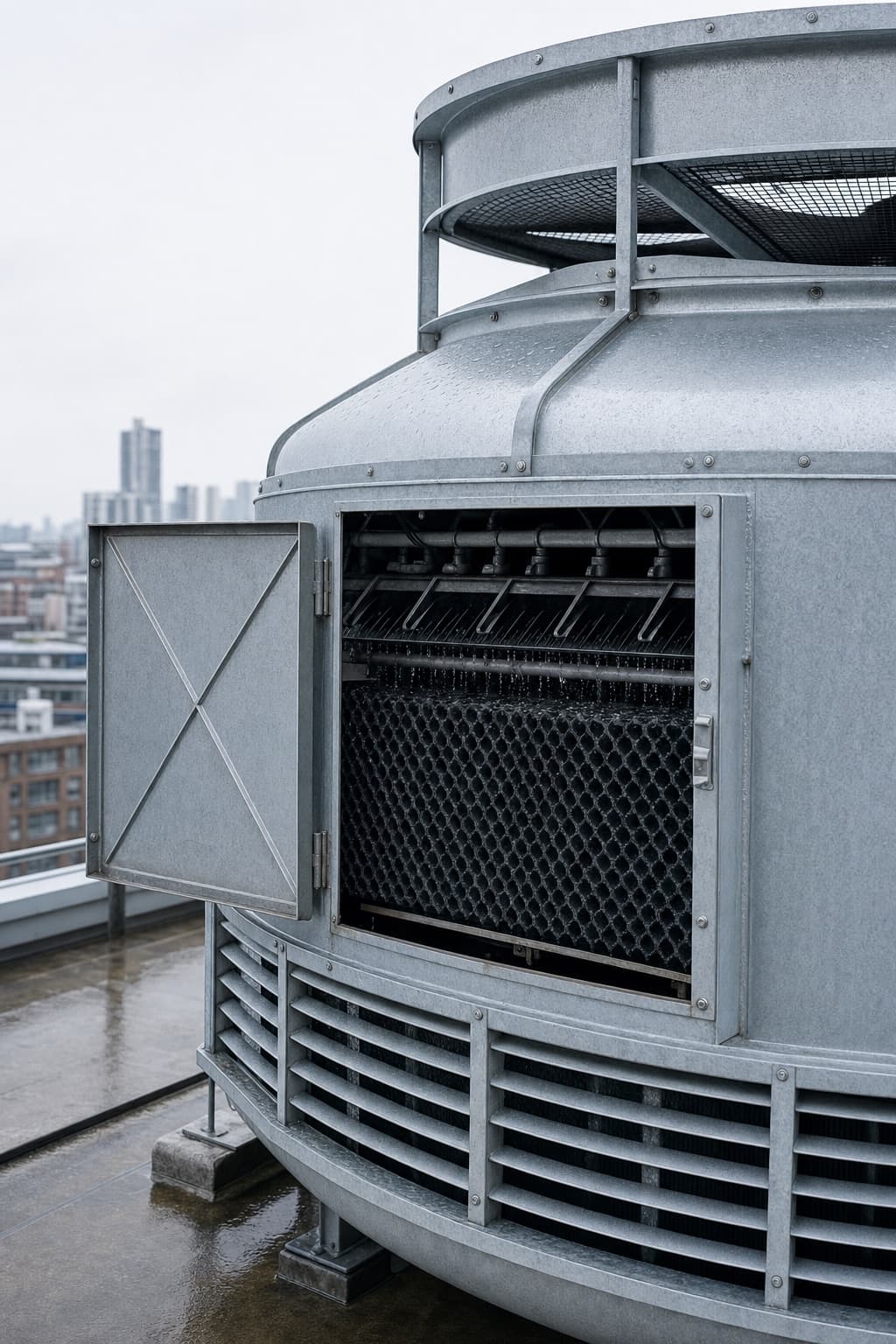
The fill pack is cleaned in place, removed for cleaning, or, if degraded, replaced; which of the three is a scope decision made before the quote, not on the day. Drift eliminators are inspected and cleaned, the distribution deck and nozzles cleared. This is the part of the scope that separates a thorough clean from a basin-only visit, and it should be explicit in the contractor’s paperwork.
Disinfection, rinse and refill
The cleaned surfaces are disinfected, the system rinsed, and the waste water disposed of under whatever discharge rules apply locally, which vary and are the contractor’s to know. Then refill, re-treatment, and return to service. A tower is not finished when it is clean; it is finished when it is running normally under its treatment regime again.
After return to service: the second sample
Once operation is stable, the same points are sampled again, by the same method, through the same laboratory. Taken too early, the result describes the disinfection rather than the tower. Taken correctly, the before and after pair is the objective record of what the clean achieved, and it comes from a party with no stake in the answer. That independence, and the sampling itself, are described under cooling tower testing.
The record that makes it auditable
The contractor’s report of work done, with photographs. The waste water disposal record. The two laboratory reports. The dates, the names, and the next scheduled clean. Together they turn a maintenance event into evidence, and they belong in the water management program file, because that is where an inspector, an insurer or a buyer of the building will look for them.
What the process cannot deliver
Permanence. The conditions that loaded the tower resume the day it restarts, and the interval to the next clean is set by the program, informed by inspection and by the sampling series, not by a universal rule. A facility that knows its own curve, because it measures it, cleans when the tower needs it. Everyone else cleans when something forces the issue, at whichever price the day commands.
Put the two samples on the contractor's schedule
One before the drain-down, one after the return to service. Both from the same laboratory; the clean is somebody else's job.