September 11, 2026 · 7 min
Commercial water testing: what is actually being tested, and for what
One term covers three different purchases, from a chemistry panel on the incoming main to a microbial survey of a whole building. Knowing which one you need is most of the buying decision.
Ninety searches a month, $14.17 a click, competition 0.71: a small query that advertisers take seriously, because the people typing it have a building and a reason. The term itself is ambiguous, and the ambiguity is worth resolving before any money moves.
Three different purchases share this name
The first is potability and chemistry testing: lead, disinfection byproducts, whatever a supply or a permit requires, usually against the incoming water. The second is process water testing for industry, where the specification comes from the process. The third is microbial testing of the building’s own systems: the water after the meter, as the building stores, heats, circulates and aerosolises it.
We do the third, for one organism. We sample building water systems for legionella and analyse the samples by laboratory culture. If your requirement is the first or second kind, you need a different laboratory, and knowing that now saves a wasted phone call. The three are sold by different providers, priced on different logic and read by different people, which is why a quote for one is not comparable with a quote for another.
The building is the subject, not the water
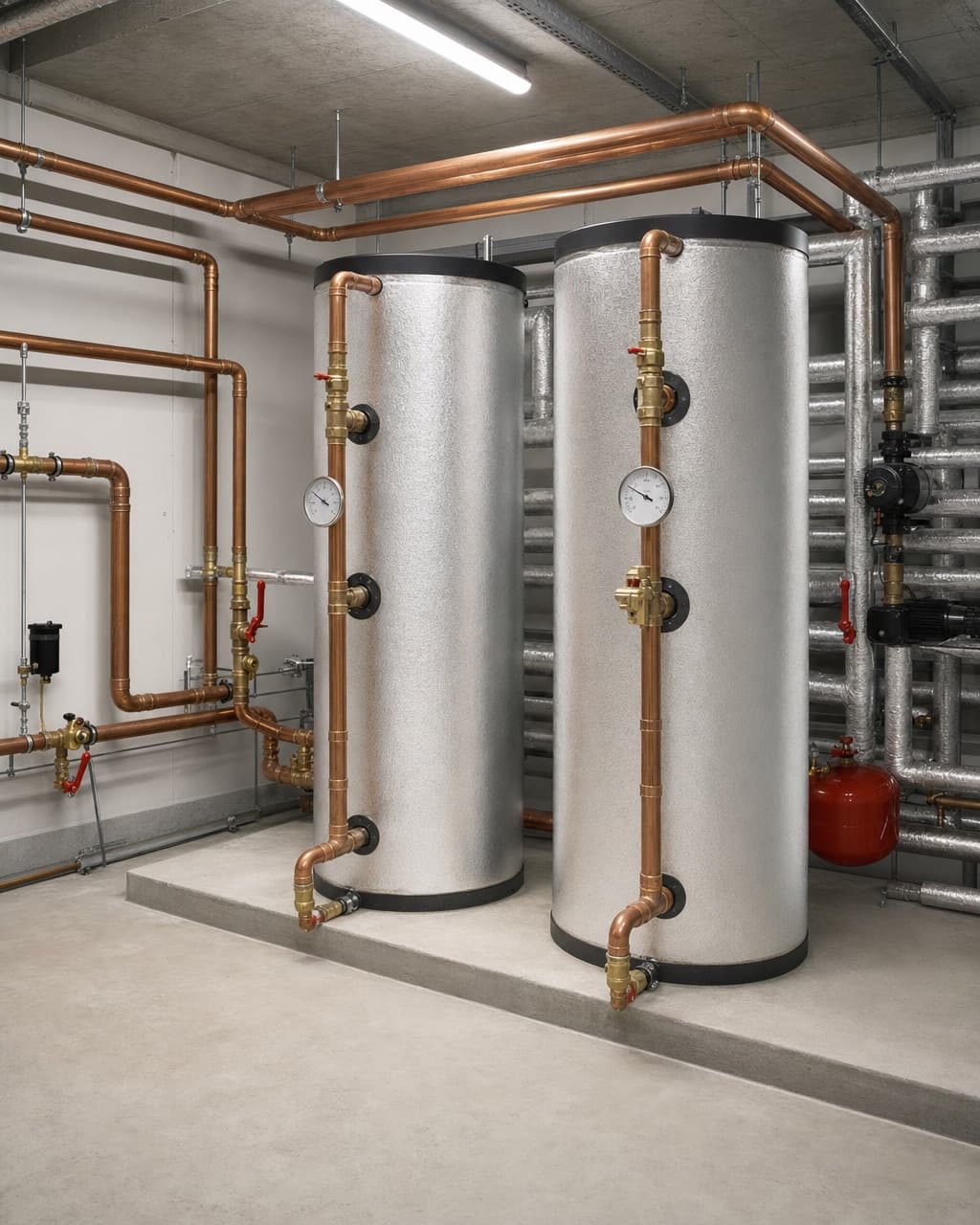
Municipal supply arrives in a known condition. What happens next is the building’s doing: storage vessels where water sits warm, recirculation loops with far ends that run cool, dead legs left by refurbishments, cooling towers, and every fixture that turns water into an aerosol. Commercial microbial testing is a survey of those conditions, made through samples, which is why the sampling plan matters more than the number of bottles. A cooling tower brings its own chemistry with it, and whether that chemistry is working is a separate question, taken up in what proves a treatment regime works. Two identical office buildings on the same supply can test very differently, because the variable is not the utility. It is occupancy, maintenance, and the history of every refurbishment since the pipework was drawn.
Why commercial buildings test at all
Sometimes because something requires it: a water management programme with a verification schedule, a jurisdiction with rules for specific equipment, an insurer, an accreditor, or a lease clause. Sometimes for information: establishing a baseline for a newly acquired property, checking a system after a long vacancy, or confirming that a remediation worked, which for a tower means the before and after pair set out in cooling tower basin cleaning. Which requirements apply to a given building is a local question with a checkable answer, and it shapes the round before any tap is opened.
The two motives produce different rounds. A compliance round samples what the requirement names, at the frequency it names. An information round samples where the questions are, and it is usually the better designed of the two.
What one round consists of
A sampling plan drawn against the system schematic. Sterile bottles at defined points, with the pre-flush or post-flush choice recorded per sample. Temperature and disinfectant residual measured at the moment of sampling. A chain of custody to the laboratory, and culture, which takes days because it grows the organism rather than guessing at it. Each sample carries a point identifier precise enough to find again, because a round that cannot be repeated at the same points cannot be compared with anything later. The full chain is described under sampling and analysis.
Where the points come from
From the system’s weaknesses, not from convenience: far ends, low-use outlets, storage, and anything that makes aerosols. Choosing them is the technical heart of the job, and it is covered in where to sample. A round built from the taps nearest the elevator measures the elevator lobby.
What the report says, and what it will not
What was found, at which point, by which method, under which conditions. It supports decisions about the system: flushing, balancing, temperature, remediation, retesting. It makes no statement about any person’s health, because no water result can, and we are not clinicians. That line is fixed on every page of this site. The report also records what was not sampled, because the points left out of a round are a finding of their own when the next round is planned.
What decides the cost
The number of points, the access, and the travel. We publish no rate card because those three variables move too much between buildings for one to be honest; how we scope a quote is set out under testing cost. A commercial round is cheapest when the plan is drawn once, well, and repeated, which is also what makes the results comparable year over year.
Describe the building, and we will draw the round
Outlets, access and travel decide the scope. The plan comes before the price.
Legionella Screen samples building water systems and cooling towers and has the samples analysed by culture in an accredited laboratory. It does not diagnose illness, does not treat anyone, and gives no medical advice of any kind.