August 3, 2026 · 6 min
Test kits versus laboratory culture: what the difference actually costs you
A kit is not a cheap version of a laboratory test. It answers a different question, and the competition on this search term tells you who benefits from the confusion.
`legionella testing kits` is searched 480 times a month and carries a competition index of 1.00, the maximum. That combination, moderate volume and total advertiser saturation, is the signature of a product being sold hard. It is worth understanding what the product is before buying one.
What the reference method does
Culture grows the organism from the sample on a selective medium and counts what appears. It is slow, it needs a laboratory, and it produces a colony count that can be compared against a defined level and against previous results from the same point, with the limits of any single count set out in what a legionella test tells you.
Crucially, it is the method that regulators, insurers and guidance documents are written around. A number from anything else may be informative, and it is frequently not the number the requirement asks for.
What faster methods do
Rapid immunoassay and molecular methods detect the presence of the organism or its genetic material, quickly and sometimes on site. They are genuinely useful for three things: screening a large number of outlets cheaply, watching whether something is changing between scheduled samples, and getting an early indication while culture is still incubating.
What they are not is a substitute for a count. A molecular method may detect material from organisms that are not viable, which is a different question from how many are growing. Understanding what the method measures decides whether the answer is usable.
The three questions that settle the choice
- Does a decision depend on the number? If somebody will act on a threshold, culture. There is no way around it.
- Does a requirement specify the method? Frequently it does, explicitly, and in a building under a programme it is the verification section that says so, as described in what a water management plan contains. Read it before choosing.
- Is the question presence or trend? A trend across many points, monitored often, is exactly where a faster method earns its place.
The failure mode of a kit is not the kit
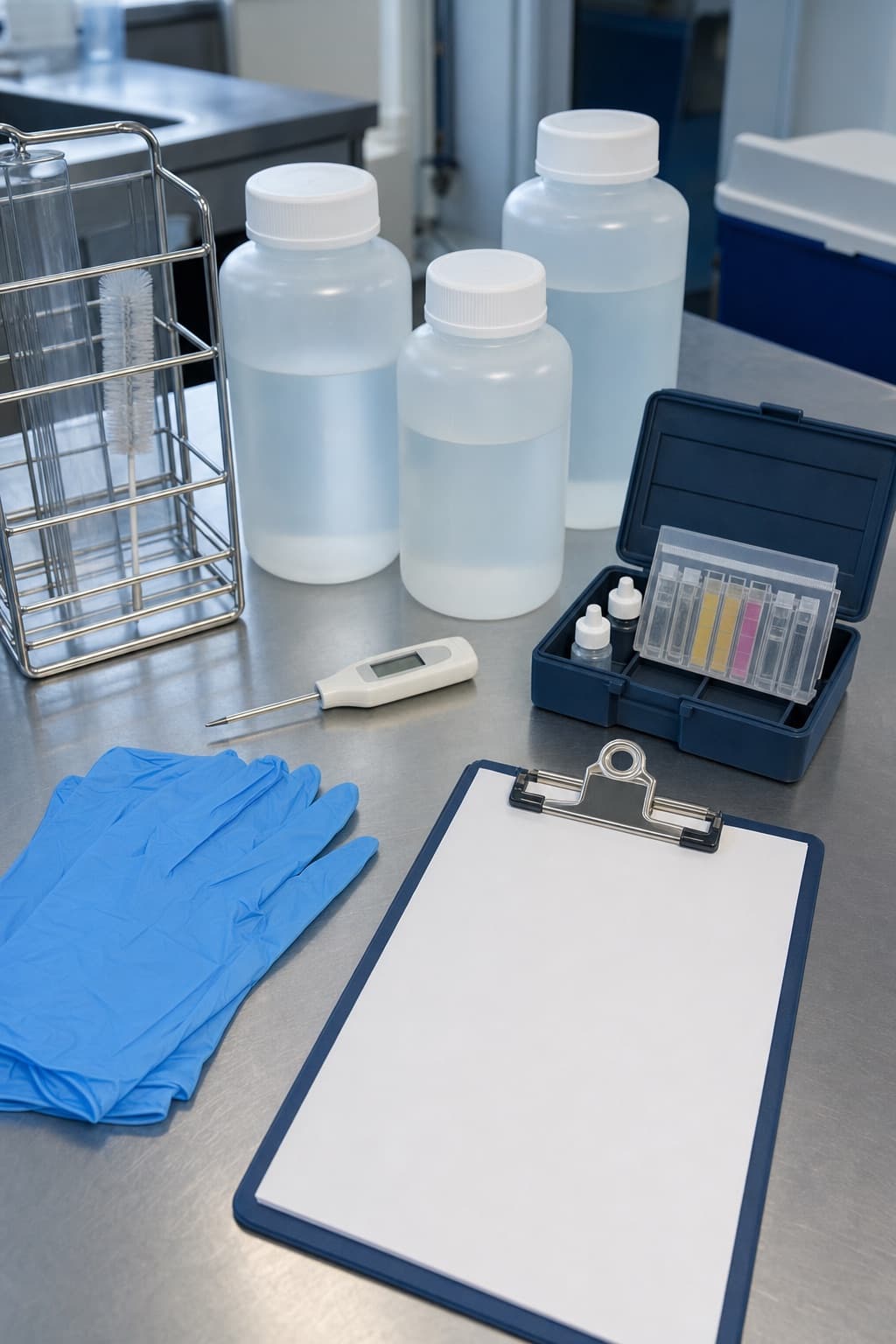
It is the sampling. A sterile bottle, a recorded temperature, a neutralised disinfectant residue, a defined pre-flush or post-flush, a chain of custody and a sample that reaches a laboratory in time all matter more to the result than the analytical method does.
A perfectly executed laboratory analysis of a badly taken sample is a precise number about nothing. That is the whole argument of sampling and analysis, and which outlets the bottles are filled at is decided in where to sample in a building.
When we will tell you a kit is enough
When you are monitoring a trend on a system already under a documented programme, between scheduled culture samples, and nobody will act on the kit result alone. That is a real use and it saves money. Outside it, a kit is a number you cannot use.
Decide the method against the decision it supports
If a decision rests on the number, it rests on culture. We will say when a kit is enough.
Legionella Screen samples building water systems and cooling towers and has the samples analysed by culture in an accredited laboratory. It does not diagnose illness, does not treat anyone, and gives no medical advice of any kind.